
Writing
Arguments about how investment operations actually work, each one written because the rule was not written down anywhere else. Everything here is free and ungated, and several pieces are paired with a working model on the Tools page.
The writing divides the same way the practice does. Investment Operations is the environment: systems at their ceiling, platform selection, data you can trace back to source, version control, and what the status quo costs. Derivatives is the program: use plans, hedge effectiveness, sizing conventions, and documentation an examiner can actually test.
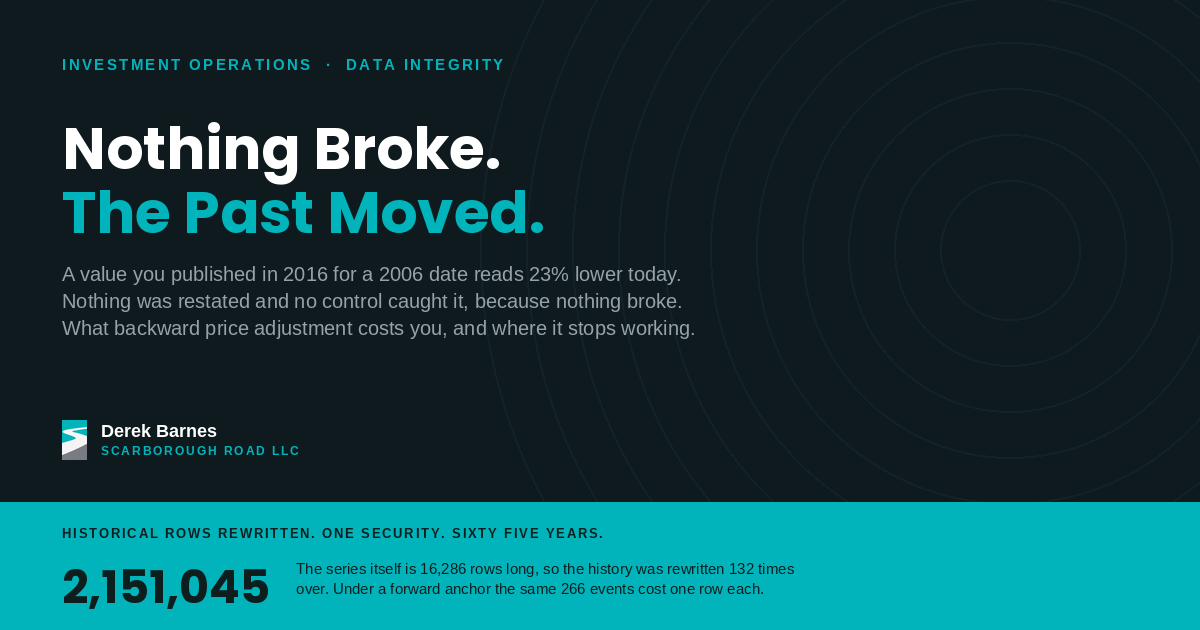
The History You Published Last Year Has Changed
A historical price you published ten years ago is not the number your system holds today, and nothing was restated to make that happen. Sixty five years of real data on what backward adjustment rewrites, what it costs to keep, and where it fails outright.
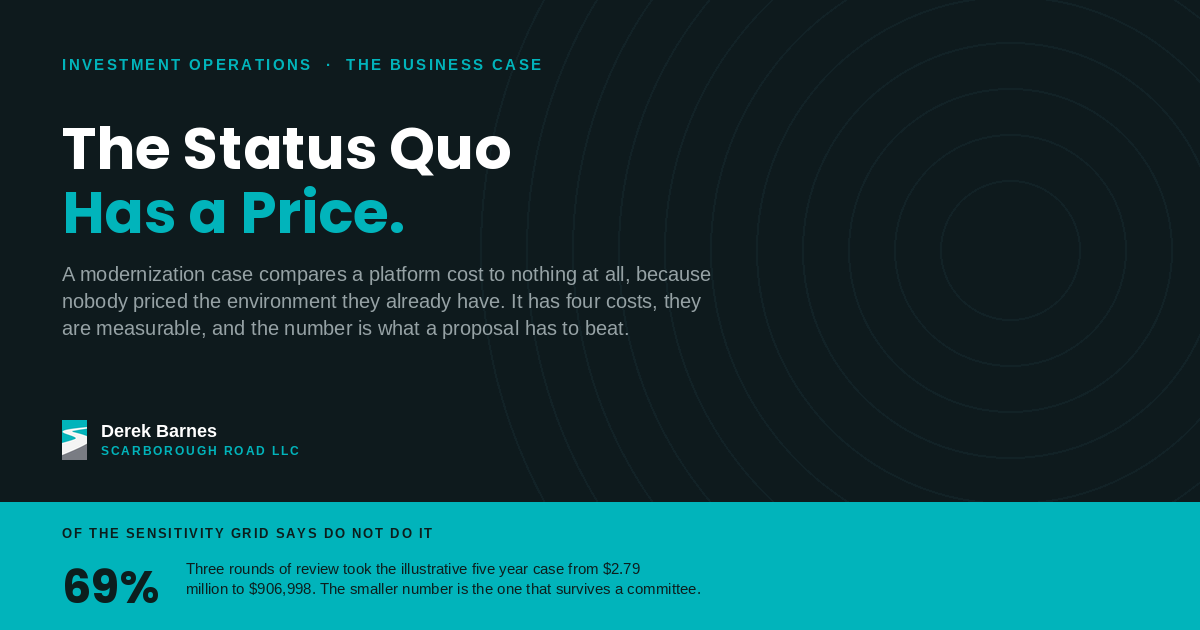
Nobody Priced the Environment You Already Have
Three complaints get raised in three different meetings and nobody connects them. They are one problem, the environment has reached its ceiling, and the reason nobody fixes it is that the business case gets built against zero.
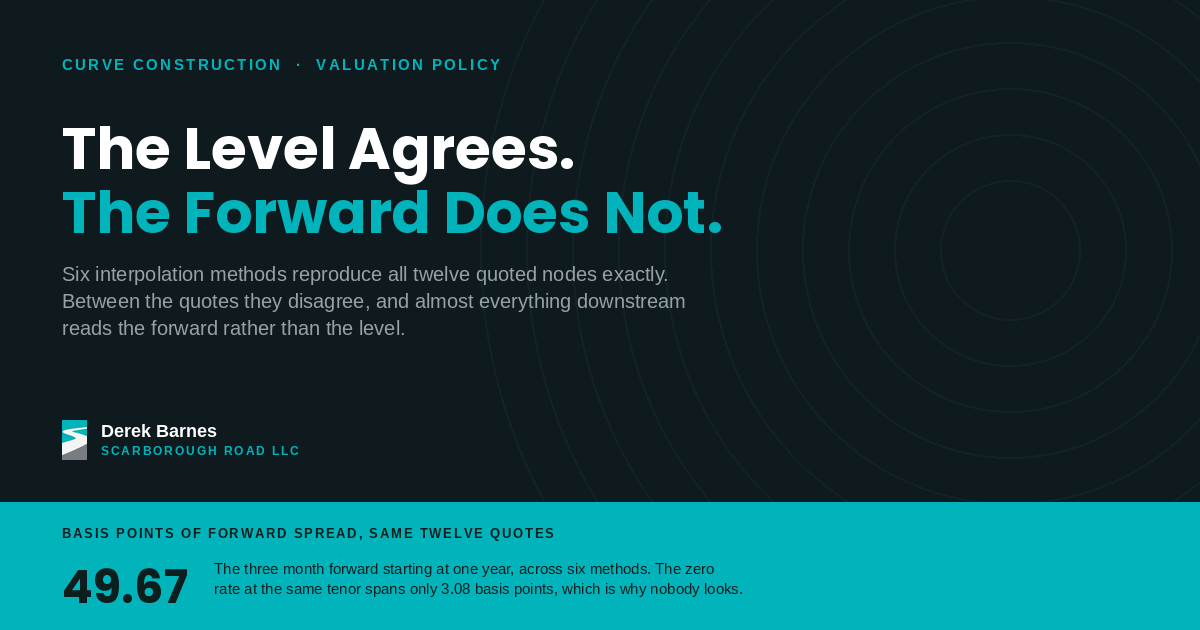
Interpolation Is a Policy Choice Nobody Wrote Down
Six interpolation methods reproduce every quoted node on a SOFR curve exactly, so two systems using different methods reconcile clean. Ask them for the zero rate between the quotes and they span three basis points. Ask them for the forward and they span fifty.
Git for the Middle Office
Version control is usually sold to analysts as a tidiness habit. It is better understood as the cheapest audit trail an investment operation can buy — and the precondition for automating anything.
Buy the Exit, Not the Demo
Twenty-four questions to ask before you buy an investment data platform — and why the ones that matter are not about what it does.

The $500 Minimum Is an Operations Decision
Hamilton Lane just opened an infrastructure fund to non-accredited investors at a $500 minimum. The interesting part is not the technology. It is what a five-hundred-dollar check does to your operating model.