
Writing
Arguments about how investment operations actually work, each one written because the rule was not written down anywhere else. Everything here is free and ungated, and several pieces are paired with a working model on the Tools page.
The writing divides the same way the practice does. Investment Operations is the environment: systems at their ceiling, platform selection, data you can trace back to source, version control, and what the status quo costs. Derivatives is the program: use plans, hedge effectiveness, sizing conventions, and documentation an examiner can actually test.
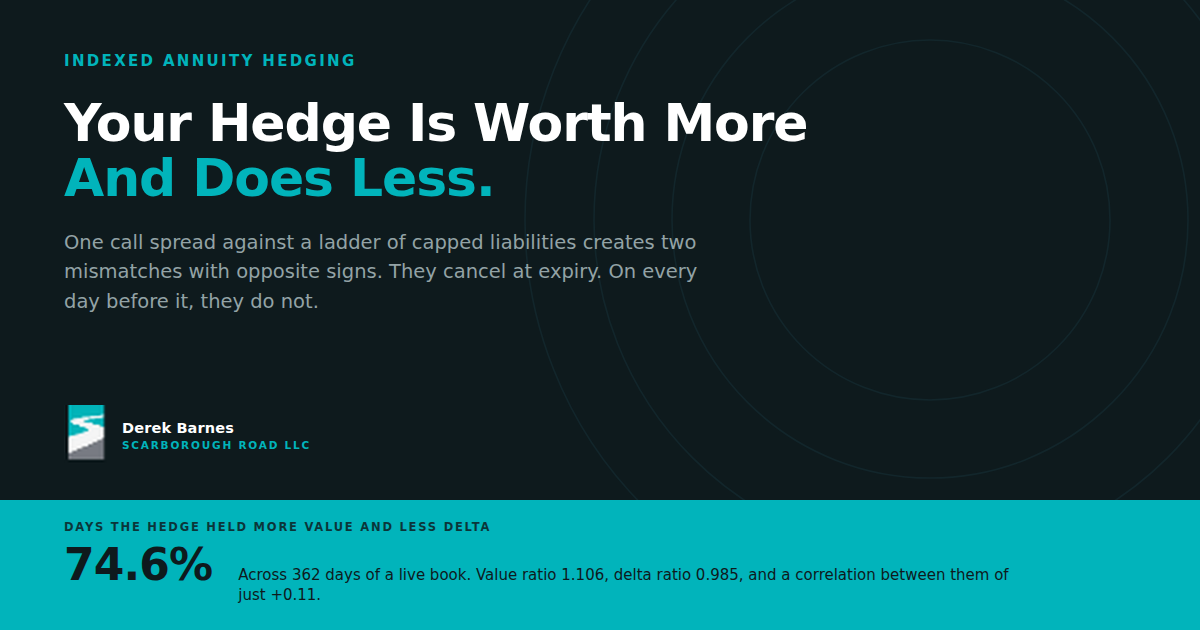
Your Hedge Is Worth More and Does Less
Hedging a ladder of capped liabilities with one call spread at the average cap creates two mismatches with opposite signs — the hedge over-covers at expiry and sheds delta faster on the path. Across 362 days of a live book they show up as two columns that look like they measure the same thing and correlate at +0.11.
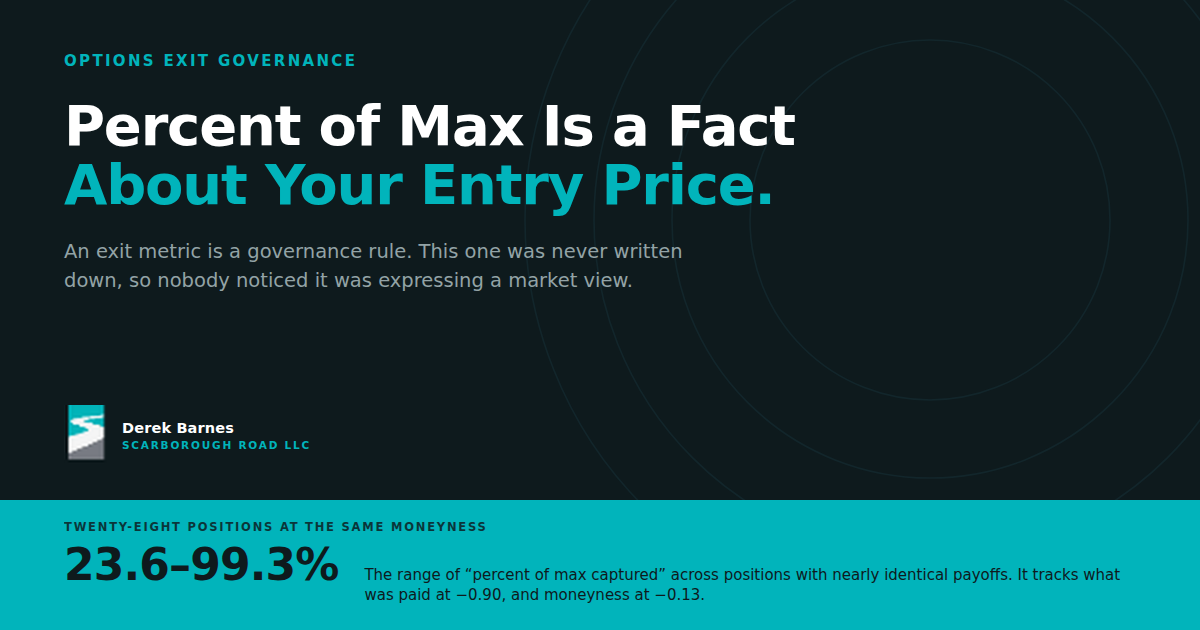
Percent of Max Is a Fact About Your Entry Price
Percent of maximum captured is the exit trigger most options books actually run on, and it is a fact about the entry price rather than about the position. A real counterparty migration, the list its metric produced, and what the following seven days did to that list.
The Clearing Exemption You Don't Have
Insurers reach for two exemptions from the CFTC clearing mandate. They are eligible for neither. What actually keeps a large share of insurer swaps out of clearing is a different thing entirely — and it has to be written down differently.
A Derivative Use Plan Is Not a Permissions List
The section everyone drafts most carefully is the section that matters least. Here is what the document is actually for.

Write Down What You Are Not Hedging
Nine of the ten required headings describe what your hedging program does. The tenth describes what you have decided to let happen — and it is the one that tells you whether the program is real.
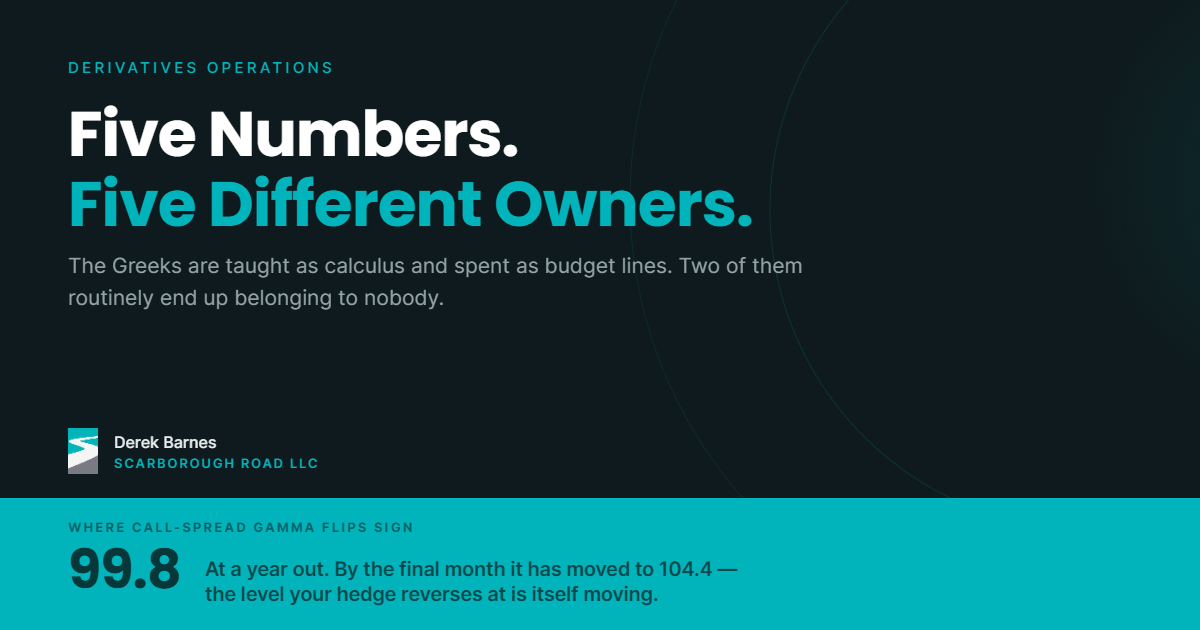
The Greeks Are an Operating Budget
Five numbers, taught as calculus and spent as budget lines. Each one commits a different resource — trading bandwidth, capital, carry, premium, balance sheet — and in most programs two of them end up with no owner at all.
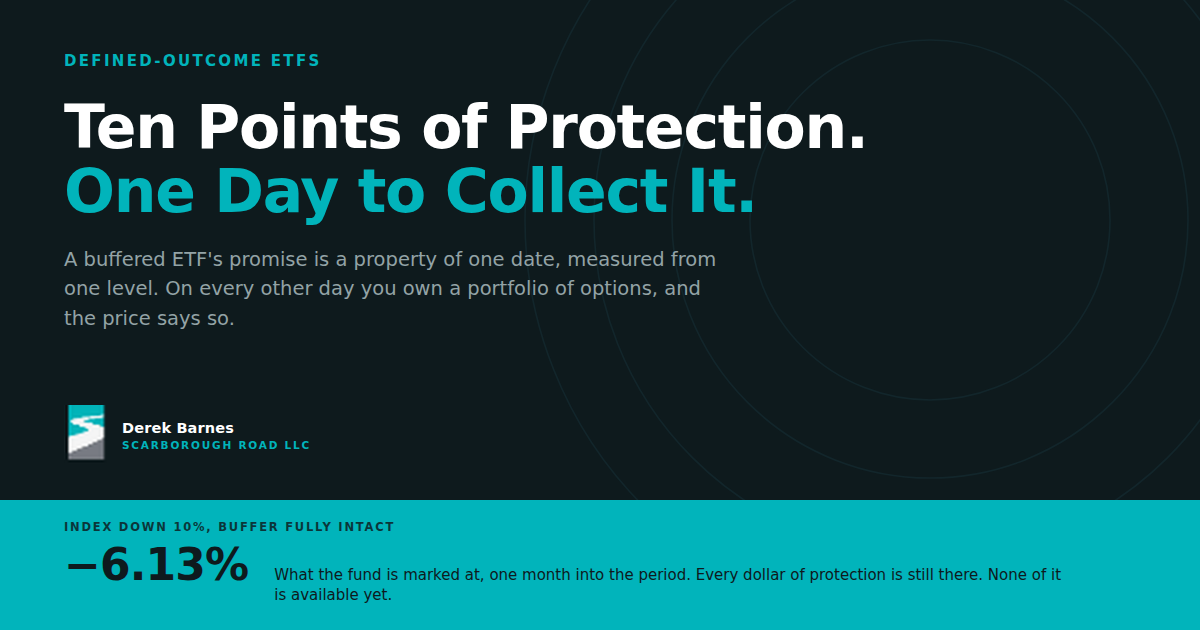
The Buffer Is a Promise About One Day
A buffered ETF makes one promise, about one day, measured from one level, to one holder who was there at the open. On every other day you own a portfolio of options, and the price says so.

The Hedge You Can Actually Run
Static versus dynamic gets argued as a sophistication ladder. It is really a question about what your operation can do on a Tuesday — and the wrong answer is expensive in a specific, predictable way.